Easter 3D Paper Card Pop Up Card SVG Review
First Impressions: Translating Paper Craft to Thread
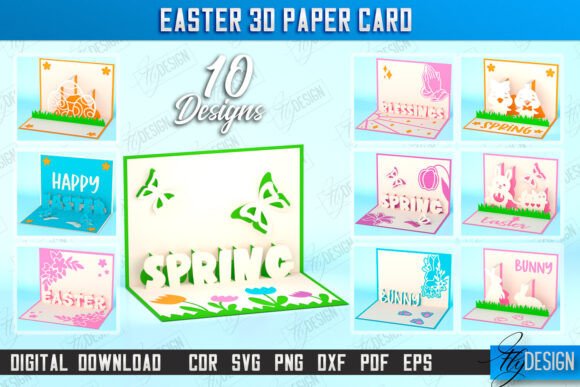
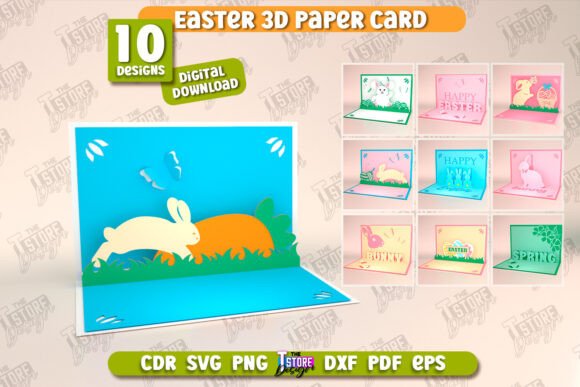
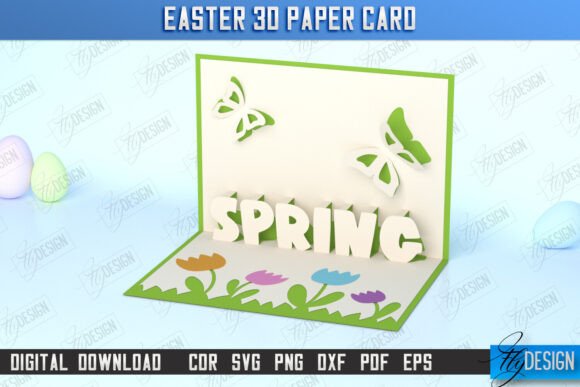
As a designer who constantly bridges the gap between digital assets and tangible textiles, my first reaction to the Easter 3D Paper Card Pop Up Card SVG was one of cautious optimism. Originally intended for cutting machines like Cricut or Silhouette, this file presents a unique challenge and opportunity for embroidery professionals. The visual personality of this design is undeniably cheerful, capturing that distinct layered depth associated with pop-up cards. However, when evaluating this as a potential machine embroidery design, we must look past the paper craft aesthetic and assess its structural integrity for needle and thread.
The mood is light, nostalgic, and distinctly spring-like. For an Etsy seller or small shop product creator, this silhouette screams "boutique holiday." It avoids the generic clip-art look, offering instead a sophisticated interplay of shapes that suggests dimension. But before I would ever hoop fabric for this, I had to consider how those crisp paper edges would translate into stitches. A 3D SVG relies on negative space and layering; in embroidery, we achieve this through color blocking, appliqué, and strategic stitch density rather than physical paper stacking.
Real-World Application: The Spring Tote Bag Test
To truly evaluate this asset, I envisioned a specific real-life scenario: creating a premium canvas tote bag for a local spring market. My goal was to produce a personalized gift that felt high-end rather than mass-produced. The Easter 3D Paper Card Pop Up Card SVG served as the central motif. Because the original file is designed for cutting, I treated it as a guide for creating a custom applique design.
In this application, the design performed beautifully as a multi-layered felt and cotton appliqué. The "pop-up" effect was simulated by using varying thicknesses of stabilizer and fabric. The bunny and floral elements from the SVG provided clear registration lines for a running stitch placement guide. For the tote bag design, this approach added actual tactile texture that mimicked the original paper card's intent. Customers at the market responded specifically to the dimensional quality; it didn't look like a flat print. This confirms that while the file is categorized under Shapes, its true value for a craft business lies in its ability to inspire mixed-media embroidery projects that stand out in a saturated holiday marketplace.
Navigating Fabric Limitations and Hoop Constraints
While the design shines on structured items, caution is required for other applications. As an experienced reviewer, I must emphasize where this digital embroidery file requires careful handling. The intricate lines typical of pop-up card designs can become problematic on stretchy or unstable fabrics.
- Stretchy Knits and Baby Clothes: If adapting this for baby embroidery or lightweight sweatshirts, the detailed inner cuts of the SVG may cause puckering. The stitch density required to secure appliqué edges on knit fabric can distort the "pop-up" illusion. Always test on scrap fabric with appropriate stabilizer before committing to a finished garment.
- Dark Fabrics: This design relies heavily on outline definition. On dark backgrounds, the contrast necessary to see the layered 3D effect is often lost unless you modify the thread colors significantly. Light outlines or reverse appliqué techniques may be necessary to maintain visual clarity.
- Small Hoop Sizes: Reducing a complex 3D shape for a 4x4 hoop or cap embroidery risks losing the delicate interior details. The satin stitch borders may merge, turning distinct layers into a muddy blob. Verify your hoop size capabilities against the design’s minimum legible dimensions.
- Frequent Washing: For items like kitchen towels or children's apparel, ensure all raw edges are fully encapsulated. Paper-cut styles often have sharp internal corners that can fray if not properly secured with a dense border stitch.
Impact on Product Value and Brand Perception
Using a specialized asset like the Easter 3D Paper Card Pop Up Card SVG signals professionalism. In the world of commercial embroidery, buyers are tired of seeing the same five stock bunnies. By adapting a paper-craft aesthetic into thread, you create a handmade product that feels curated and artistic. This directly influences perceived value. A simple t-shirt becomes a conversation piece; a standard pillow cover transforms into heirloom nursery decor.
For digital product sellers creating printable mockups or selling converted embroidery files, this design offers excellent marketing potential. The inherent depth of the artwork photographs well, making it easier to showcase texture in listing photos. However, brand consistency is key. Ensure this whimsical, layered style aligns with your existing catalog. If your shop focuses on minimalist line art, this busy, dimensional style might confuse your customer base. Conversely, for shops specializing in cottage-core or vintage aesthetics, this holiday embroidery asset is a perfect fit that reinforces brand identity and boosts buyer engagement.
Critical Designer Notes Before You Stitch
Before loading this file into your machine or listing it in your shop, please adhere to these practical guidelines. Remember, this product description specifies it is great for cutting machines; it does not explicitly guarantee pre-digitized embroidery readiness.
- Verify File Compatibility: Confirm whether you are receiving a raw SVG for manual digitizing or a pre-converted embroidery file. If it is a cutting file, you will need digitizing software to assign fill stitch, satin columns, and trims. Do not assume auto-digitizing will preserve the 3D nuance.
- Licensing Check: Scrutinize the license terms regarding finished product sales versus digital redistribution. Just because a file is available doesn't mean you can sell the digitized version to other embroiderers. Protect your business by respecting intellectual property.
- Contrast Testing: Run a black-and-white simulation in your software. If the layers disappear without color, the design relies too heavily on thread hue rather than structural stitching. Adjust your stitch density or add texture fills to ensure the 3D effect reads in monochrome or low-contrast scenarios.
- Stabilizer Strategy: For a design mimicking paper, crispness is everything. Use a tear-away or cut-away stabilizer that supports the weight of multiple appliqué layers. Floppy stabilization will ruin the architectural feel of the pop-up card concept.
- Mockup Validation: Before listing as a custom apparel option, create realistic mockups. Does the design look balanced on the chest of a sweatshirt? Is it too large for a baby onesie? Visualizing scale prevents returns and customer dissatisfaction.
Ultimately, the Easter 3D Paper Card Pop Up Card SVG is a versatile starting point for creative entrepreneurs willing to bridge the gap between paper crafting and textile art. It demands more technical attention than a standard fill-stitch bunny, but the reward is a distinctive, high-value product that captures the joyful complexity of spring. Whether you are making patches, decorating boutique merchandise, or designing personalized gifts, approaching this file with a critical, maker-focused mindset ensures your final embroidery project honors both the original design intent and the quality standards your customers expect.