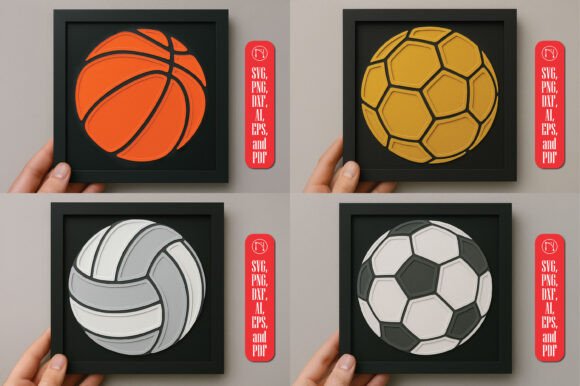
3D SVG Shadow Boxes: Layered Papercut Ball Bundle
Evaluating Visual Impact for Local Sports Retail Branding
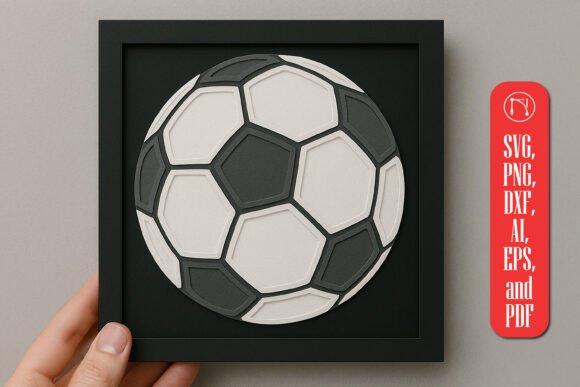
As a brand designer specializing in local business identity, my first impression of the Layered Papercut Ball SVG Cut File Bundle is that it bridges the gap between digital illustration and tactile craftsmanship. When reviewing this graphic design asset, the immediate mood is energetic yet meticulously structured. It does not feel like a generic clipart download; rather, it suggests a brand personality that values precision, community spirit, and hands-on creativity. For a local business project I recently consulted on—a boutique sports memorabilia shop and custom trophy studio—this aesthetic was exactly what was needed to soften the typically rigid, masculine vibe of sports retail into something more welcoming and artisanal.
The design style leans heavily into modern nostalgia. It feels premium because of the implied depth, yet friendly enough for a family-oriented handmade business. Unlike flat vector icons, the layered nature of these files creates an inherent sense of value. When applied to small business branding, this texture signals to customers that the business pays attention to detail. It fits perfectly for brands that want to appear established and trustworthy without feeling corporate or sterile. The visual weight of the papercut style commands attention on shelves and social feeds alike, making it a strong contender for businesses needing to stand out in crowded local markets.
Translating Digital Layers into Physical Packaging and Signage
In practical application, the versatility of this bundle extends far beyond its intended use for Shadow Boxes. While creating a cohesive brand identity for our sports boutique client, we utilized these assets across multiple touchpoints. The most obvious application is in physical retail environments. As a 3D SVG, the file is optimized for laser cutters and Cricut machines, allowing us to produce actual layered paper signage for store displays. However, as a 2D graphic element, it proved equally valuable for packaging design.
We integrated the ball illustrations into product labels for custom team kits and commemorative gift boxes. Because the design relies on distinct layers rather than gradients, it reproduced beautifully on textured cardstock and kraft paper, maintaining clarity even at smaller sizes. For marketing visuals, we used the PNG versions as hero graphics in email newsletters and website banners. The depth created by the shadow effects added a professional polish to our web design without requiring expensive photography. Additionally, these assets served as excellent decorative elements on thank-you cards and unboxing inserts, reinforcing the brand’s commitment to quality from the moment of purchase to the post-sale experience.
Strengthening Customer Trust Through Consistent Visual Hierarchy
A major challenge in commercial design for local shops is establishing credibility quickly. This asset supports business presentation by providing a consistent visual anchor. When customers see the same high-quality, intricate motif on a business card, a shopping bag, and an Instagram post, it builds subconscious trust. The visual hierarchy established by the layered balls helps guide the eye; they act as focal points that break up text-heavy layouts on price lists and flyers. Furthermore, the association with sports evokes emotional connections—teamwork, victory, and community pride—which transfers directly to the brand perception. By using this printable design strategically, we elevated the perceived value of the merchandise, justifying higher price points through superior presentation.
Strategic Placement: Maximizing Appeal Without Clutter
While the Layered Papercut Ball SVG Cut File Bundle is robust, it requires thoughtful placement within a professional branding system. This asset works best when given room to breathe. It shines as a primary visual on packaging accents, seasonal campaign headers, and boutique window decals. In social media graphics, it serves as an excellent frame or background element for announcing tournaments or new inventory. For editorial design in lookbooks or catalogs, it provides necessary whitespace relief and thematic consistency.
However, designers must exercise caution. Due to the intricate lines and simulated shadows, this asset should be avoided in areas requiring high legibility at very small scales, such as ingredient lists or legal disclaimers. It can compete with typography if placed too close to body copy. I would also advise against using it for ultra-minimalist luxury brands where negative space is the primary design feature; the decorative density might clash with that specific aesthetic. Additionally, avoid placing these detailed vectors over busy photographic backgrounds or low-contrast patterns, as the defining shadow layers will get lost, reducing the impact of the illustration.
Critical Pre-Flight Checks for Commercial Application
Before deploying any design assets from a creative marketplace into a live client project, rigorous testing is non-negotiable. My standard evaluation process for this bundle included several key steps to ensure viability for commercial design:
- Mockup Testing: Always test the SVG on real product mockup templates before cutting. Verify how the shadows render on different screen resolutions and print substrates.
- Monochrome Validation: Check the design in solid black and white. If the layers rely solely on color differentiation rather than line weight or spacing, it may fail in single-color printing scenarios like receipt paper or embossing.
- Typography Pairing: Test the asset beside various font styles. We found it paired exceptionally well with bold sans-serif fonts for headlines but required careful kerning when placed near delicate script fonts to avoid visual competition.
- Vector Editability: Inspect the SVG nodes. Ensure paths are closed and layers are grouped logically. This allows for easy recoloring to match specific team colors or brand palettes without breaking the file structure.
- Licensing Verification: Crucially, confirm the commercial license terms. Ensure the license covers both digital use (social media, web) and physical end-products (packaging, merchandise) if you intend to sell items featuring the design.
- Competitor Analysis: Compare the rendered asset against local competitor packaging. Ensure the level of detail distinguishes your client’s brand rather than blending in with generic sports clipart.
Ultimately, the Layered Papercut Ball SVG Cut File Bundle offers significant value for creative entrepreneurs and local business owners looking to inject dynamic energy into their visual identity. Whether used as a literal 3D SVG for dimensional art or adapted as a flat graphic for Canva template customization, it provides a professional foundation for sports-themed branding. By approaching this asset with a strategic mindset—respecting its decorative complexity while leveraging its emotional resonance—designers can transform a simple cut file into a cornerstone of a successful, recognizable local brand.